
February 2026

Strategies

Liquidity Sweeps & Stop-Loss Hunting: How Smart Money Traps Retail Traders Before the Real Move

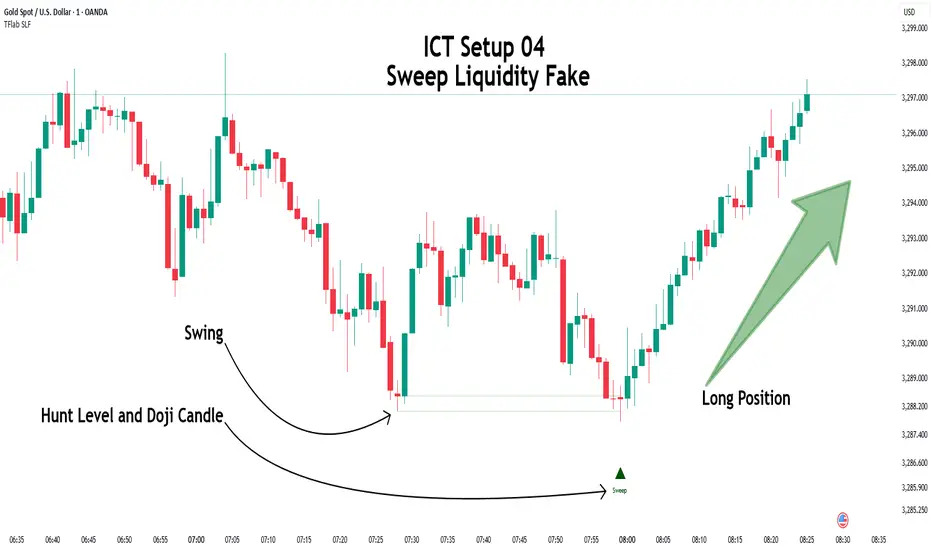
Introduction If you’ve ever placed a trade near support or resistance, only to watch price spike against you, hit your stop-loss, and then move perfectly in your original direction, you’ve likely experienced a Liquidity Sweep. This is not random. It’s a deliberate market behavior where smart money hunts retail stop-losses to collect liquidity before initiating the real move. In this blog, you’ll learn: Let’s break it down. What Is a Liquidity Sweep? A Liquidity Sweep (also called Stop-Loss Hunting) happens when the price temporarily breaks a key support or resistance level to trigger clustered stop-loss orders and pending entries then quickly reverses. Retail traders usually place stops: Institutions and large players need liquidity to enter big positions. Those retail stops are the liquidity. So price is pushed into those zones first, not to continue but to fill large orders cheaply. Once liquidity is collected, the real directional move begins. Why Liquidity Sweeps Form Near Support & Resistance Support and resistance zones naturally attract: This creates high liquidity pools. Smart money targets these areas because: ✅ Maximum orders available✅ Minimal slippage for large entries✅ Retail emotions peak here (fear & FOMO) That’s why you’ll often see: All classic signs of liquidity grabs. Typical Structure of an SL Hunt Setup A textbook liquidity sweep looks like this: This is called a false breakout with displacement. The Core Trading Idea Never trade the breakout. Trade the rejection AFTER liquidity is taken. Instead of chasing moves, wait for: Patience here changes everything. Entry Strategy Using Multiple Confirmations Liquidity sweeps alone are powerful, but combining them with indicators increases accuracy dramatically. Here’s a professional framework: Step 1 – Identify Key Support / Resistance Mark: These are your liquidity magnets. Step 2 – Wait for Liquidity Sweep Look for: ✅ Wick beyond level✅ Candle closes back inside✅ Volume spike (optional)✅ Immediate rejection No sweep = no trade. Step 3 – Add Indicator Confirmation Now combine with ANY of the following: RSI Confirmation For Shorts: For Longs: This confirms momentum reversal. EMA Crossover Confirmation Use fast EMA + slow EMA (example: 9 & 21): After sweep: This confirms the trend shift. Supertrend Confirmation After liquidity grab: This confirms trend alignment. Example Long Setup Example Short Setup Risk Management (Most Important Part) Even perfect setups fail without risk control. Use: ✅ Fixed risk per trade (1–2%)✅ SL beyond sweep high/low✅ Minimum Risk:Reward = 1:2✅ Avoid overtrading Remember: Your job is not to win every trade your job is to survive long enough for probabilities to work. Common Mistakes Traders Make 🚫 Trading every wick🚫 Entering before confirmation🚫 Tight stop inside liquidity zone🚫 Ignoring higher timeframe levels🚫 Revenge trading after sweep Avoid these, and your consistency improves instantly. Final Thoughts Liquidity Sweeps are not manipulation they are how markets function. Once you understand that price must collect orders before moving, everything changes: Combine Liquidity Sweeps with RSI, EMA Crossovers, or Supertrend, and you’ll have a high-probability system built around real market behavior, not lagging indicators alone.

News & Updates

Why Nifty IT Stocks Are Falling: Key Reasons Behind the Recent Sell-Off

Why Nifty IT Stocks Are Falling – Explained (2026 Analysis) The Nifty IT index, representing India’s leading information technology companies like TCS, Infosys, Wipro, HCL Tech, and Tech Mahindra, has recently experienced sharp declines, with multiple sessions of losses and several heavyweight stocks slipping to multi-month lows. This has raised alarm among investors and market watchers. In this blog, we break down the top reasons behind this downturn, what it means for the sector, and what investors should watch next. 1. AI-Driven Disruption Fears One of the largest triggers for the current sell-off is the fear that artificial intelligence (AI) will disrupt the traditional business model of Indian IT companies. Firms in the sector have historically relied on a labour-intensive, outsourcing-based model, billing clients for manpower deployed across projects. Recent developments – such as AI tools capable of automating tasks across legal, marketing, data processing, and operations have heightened investor concerns that billable hours and staffing demand may shrink, undermining future revenue growth. 2. Fading U.S. Rate Cut Expectations Strong economic data out of the United States, including robust job growth, has reduced market expectations for near-term interest rate cuts by the U.S. Federal Reserve. Higher or sustained interest rates tend to dampen global growth prospects, leading to slower tech spending by businesses. As Indian IT firms derive a significant portion of revenue from U.S. clients, this macroeconomic shift has weighed heavily on valuations. 3. Global Tech Market Weakness Indian IT stocks are not moving in isolation. Broader declines in global technology markets, including sell-offs in major indices like the Nasdaq and weakness in ADRs of Infosys and Wipro, have spilled over into Indian equities. These linkages reflect rising risk aversion among investors and momentum selling in technology sectors worldwide. 4. Profit Taking and Valuation Corrections After years of strong performance, many IT stocks were trading at relatively high valuations. When market sentiment shifts especially on fears of slower growth – profit booking can accelerate downturns, driving prices lower even without negative company-specific news. 5. Structural Business Model Challenges Beyond AI and macro factors, analysts point to deeper concerns about the traditional IT services model. As enterprises increasingly demand outcome-based pricing and digital transformation services instead of routine outsourcing work, Indian IT players may need to reinvent their service offerings and adapt their revenue mix. 6. Sector Rotation & Foreign Investor Outflows At times of volatility, investors often rotate capital into sectors perceived as safer or more defensive, such as banking or consumer goods, away from large tech exposures. Additionally, foreign institutional investors have been reducing exposure to risk assets, contributing to downward pressure on IT equities. What This Means for Investors The recent fall in the Nifty IT index reflects a mixture of structural disruption fears, macroeconomic shifts, and changing investor sentiment. While AI holds promise for long-term technological transformation, its current market interpretation is skewed toward threat rather than opportunity, especially for legacy outsourcing models. Understanding these forces can help investors navigate volatility and position themselves for future growth opportunities.

Scroll to Top